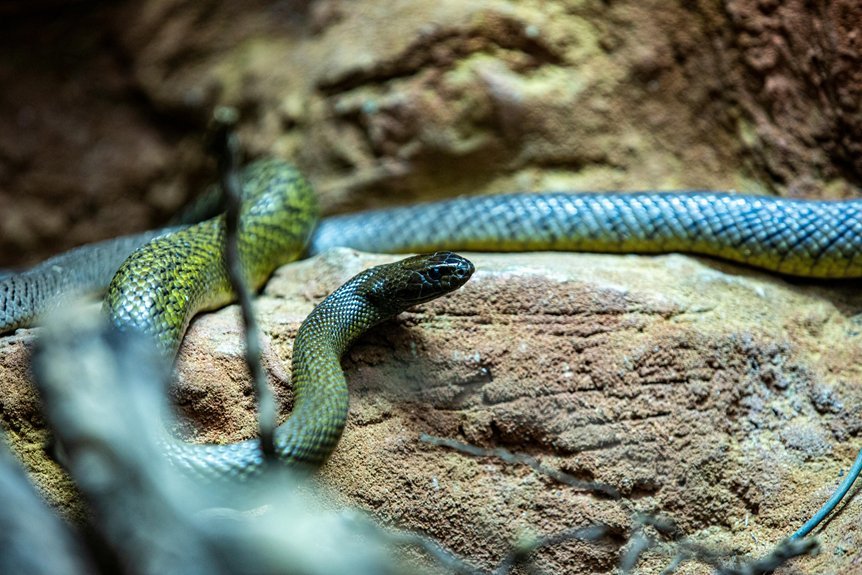
The reticulated python, known as the world’s longest snake, commands attention with its impressive length that can surpass 20 feet. This species inhabits the lush environments of Southeast Asia, thriving in varied ecosystems. Its unique ambush hunting techniques highlight its adaptability and predatory skills. However, the ecological implications of its presence raise questions about its role in maintaining balance within its habitat. Understanding these dynamics reveals much more about this fascinating creature’s significance.
The Record-Holder: An Overview of the Longest Snake
The record-holder for the longest snake is the reticulated python (Malayopython reticulatus), a species renowned for its impressive length and striking patterns.
Its record attributes often exceed 20 feet, with precise measurement techniques such as the use of calibrated tapes and careful observation ensuring accuracy.
These methodologies validate claims and contribute to a deeper understanding of this extraordinary reptile’s dimensions and ecological significance.
Habitat and Distribution: Where These Giants Roam
Native to Southeast Asia, the reticulated python inhabits a diverse range of environments, from dense tropical rainforests to mangrove swamps and grasslands.
This species thrives in rainforest ecosystems, where humidity and ample cover facilitate its survival.
Additionally, it frequently occupies river habitats, utilizing water sources for hunting and thermoregulation, demonstrating its adaptability to varied ecological niches across the region.
Behavior and Diet: The Life of a Colossal Serpent
While exploring the behavior and diet of the reticulated python, one quickly discovers its remarkable adaptability as a predator.
Utilizing diverse hunting techniques, it ambushes prey with stealth and precision. Its feeding habits reveal a preference for large mammals, employing constriction to subdue them.
This colossal serpent exemplifies the intricate balance of nature, showcasing both its prowess and the survival instincts honed through evolution.
Myths and Legends: Cultural Significance of the World’s Longest Snake
Throughout history, cultures across the globe have woven intricate myths and legends around the reticulated python, often elevating this formidable serpent to a status of reverence and fear.
Snake symbolism permeates cultural folklore, representing duality—creation and destruction. In various traditions, the python embodies wisdom, fertility, and transformation, reflecting society’s complex relationship with nature and the primal forces that shape human existence.
Conclusion
The reticulated python, a living symbol of nature’s grandeur and adaptability, weaves through the lush tapestries of Southeast Asia, embodying both the beauty and complexity of its ecosystems. As it silently constricts its prey, the snake serves as a reminder of the delicate balance within the food web, where each creature plays a vital role. Its presence not only signifies ecological health but also reflects humanity’s deep-seated fascination with the mysteries of the natural world, urging deeper respect for its majesty.